


Let’s be honest—most of us spent our school years staring at the back of someone’s head, trying to stay awake while a teacher droned on about theories we’d forget by the weekend. That “passive” style of learning is finally hitting a wall. In a world where you can Google any fact in three seconds, memorization is useless. What matters now is application.
That’s where Duaction comes in. It’s a bit of a clunky name, but the concept is brilliant: it’s the bridge between “knowing” something and actually “doing” it.
What’s the Big Deal About Duaction?
At its heart, Duaction is just learning by doing. Think about how you learned to drive a car or cook a decent meal. You didn’t just read a book; you got behind the wheel or picked up a spatula.
The DNA of this method is simple:
- Real-world stakes: You use knowledge in contexts that actually matter.
- Total immersion: You aren’t just watching from the sidelines; you’re in the game.
- The “Fail Fast” rule: You get immediate feedback. If you mess up, you fix it right then and there, which is how the brain actually wires itself to remember.
Breaking Down the Moving Parts
1. Scrapping the Textbooks for Experience In a Duaction environment, the “doing” comes first. You don’t read about chemical reactions for a month; you get into the lab (or a virtual one) and see what happens when you mix things. It makes the lesson “sticky”—it stays in your brain because you have a physical memory of it.
2. Learning is a Team Sport Social interaction is baked into the process. Whether it’s a group workshop or a peer-led project, Duaction forces you to talk, debate, and collaborate. It turns out, explaining a concept to a teammate is one of the fastest ways to master it yourself.
3. It Meets You Where You Are The “factory model” of education—where 30 kids move at the exact same pace—is broken. Duaction is flexible. It’s more of a personalized journey that adjusts to your specific strengths, so you don’t get bored if you’re ahead or lost if you’re struggling.
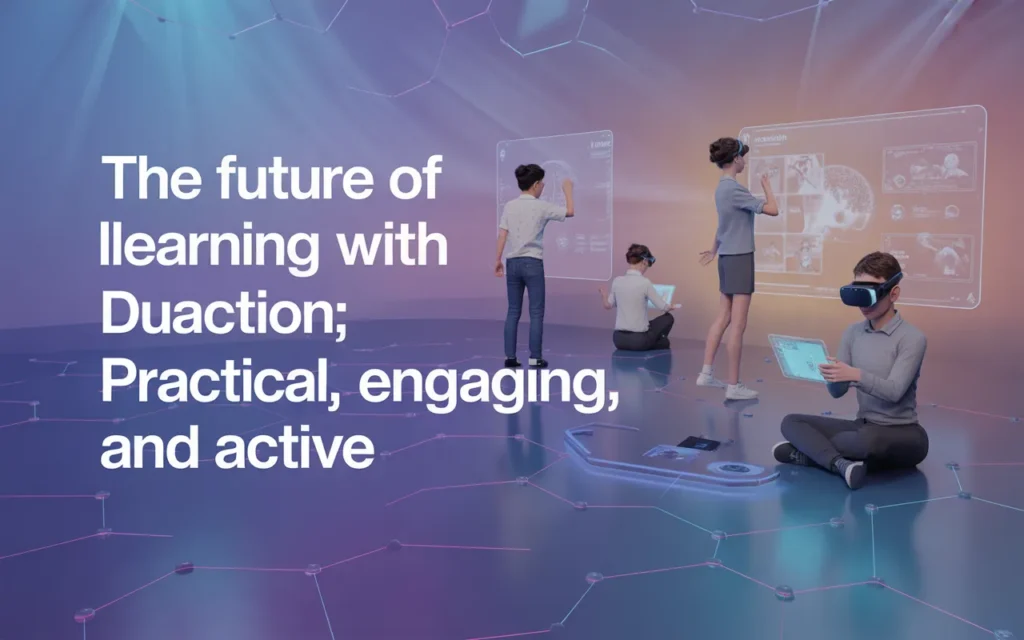
4. High-Tech Safety Nets This is where it gets cool. Using VR (Virtual Reality) and AR (Augmented Reality), Duaction lets people practice dangerous or expensive skills—like heart surgery or flying a plane—in a digital space where mistakes don’t cost lives or millions of dollars.
Does It Actually Work?
Short answer: Yes. When you’re active, your retention rates skyrocket. You’re not just a sponge soaking up water; you’re a builder using tools. This develops critical thinking—the ability to look at a messy, real-life problem and figure out a way through it. That’s a skill you can’t get from a multiple-choice quiz.
The Catch
Of course, it’s not all sunshine. Duaction is harder to pull off than a standard lecture. It requires better tech, more funding, and—most importantly—teachers who are willing to act more like “coaches” than “bosses.” Scaling this for a class of 100 people takes some serious creative planning.
The Final Word
The era of the “passive student” is over. Whether you’re a CEO training your staff or a student in a lab, the goal is the same: stop watching and start acting. Duaction isn’t just a trend; it’s a return to the most natural way humans learn. We were never meant to just sit still and listen—we were meant to build.