


If you live in rural Norway, the Viltnemnd isn’t just a government committee—it’s the group you call when a moose is standing in your garden or when a deer is hit on the local highway. But as of July 2026, the game has changed.
The transition from the old Viltloven (Wildlife Act) to the brand-new Viltressursloven (Wildlife Resources Act) has officially updated how these local boards operate. Here is the real-world breakdown of what a Viltnemnd actually does and why they are more tech-heavy than ever before.
1. The Local Authority Model
In Norway, wildlife management isn’t dictated solely from a desk in Oslo. Instead, it’s decentralized. Every kommune (municipality) has its own Viltnemnd. Think of them as a bridge between high-level environmental laws and the practical reality of the forest.
They aren’t just bureaucrats; the board is usually a mix of local hunters, farmers, and environmentalists. This “local knowledge” is the secret sauce. They know exactly which valley has too many deer and which farmer is losing too much crop to the local moose population.
2. The 2026 Legal Pivot: From “Wildlife” to “Resources”
The biggest news for 2026 is the implementation of the Viltressursloven. This isn’t just a name change; it represents a shift in how Norway views its wilderness.
- Drone Integration: For the first time, new regulations (Prop. 64 L) have explicitly cleared the way for Viltnemnda to use drones with thermal cameras for Viltnemnda’s searching for injured large game (ettersøk).
- Hunter ID Shifts: The paperwork is being modernized. Trap marking is moving from “Name and Number” to a unified Jeger-ID, streamlining the data the Viltnemnd has to track.
- Quota Management: The boards are now using more aggressive “predictive” models to set hunting quotas, especially as climate shifts change the migration patterns of red deer and roe deer across the country.
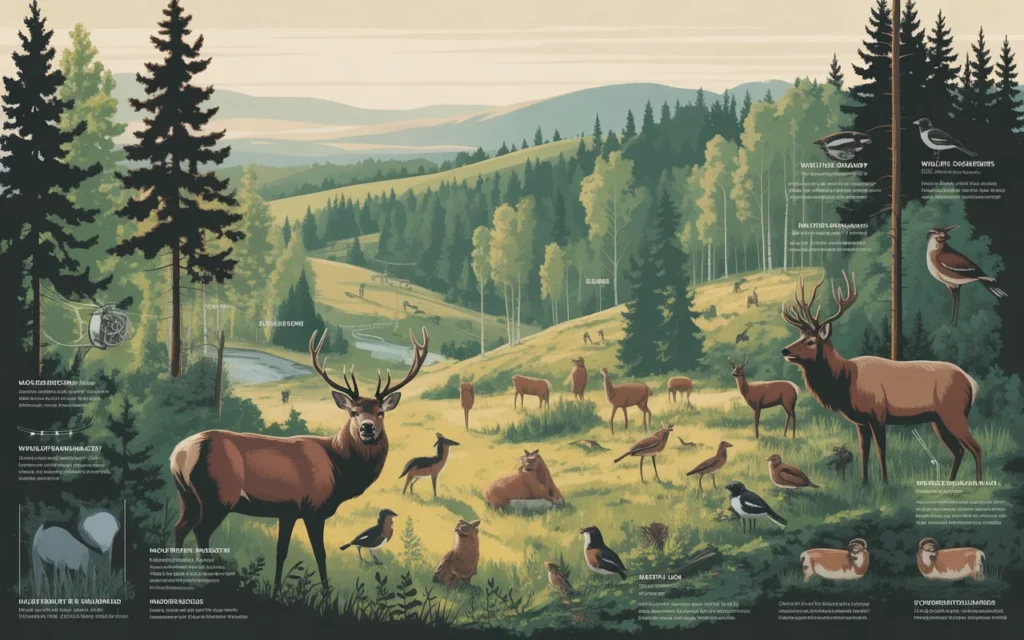
3. What Happens When You Hit a Moose?
This is where the Viltnemnd is most visible to the public. In Norway, if you hit a wild animal, you call the police (0280), who then dispatch the Fallvilt-team—the operational arm of the Viltnemnd.
- They are trained to track injured animals in the dark.
- They handle the humane culling of animals that cannot be saved.
- They collect biological data (teeth, jawbones, or tissue) that feeds back into national biodiversity research.
4. The “Wolf Zone” Controversy
In 2026, the Viltnemnds in eastern Norway are at the center of the heated wolf management debate. While national quotas for 2026 were set at 27 wolves, the local boards Viltnemnda’s are the ones who have to mediate between angry livestock farmers and conservationists. It’s a thankless, high-pressure job that requires a deep understanding of both local politics and ecology.
Quick Facts: Viltnemnda 2026
| Feature | Description |
| New Law | Viltressursloven (Effective July 1, 2026) |
| Tech Update | Thermal drones now legal for ettersøk (searches). |
| Structure | Municipal-level committees (local hunters & farmers). |
| Core Task | Population control, hunting quotas, and traffic accident response. |
The Bottom Line
The Viltnemnd is the reason Norway can balance a massive moose population with modern high-speed traffic and agriculture. In 2026, they are moving away from being “the hunting club” and becoming high-tech resource managers. If you see a drone hovering over a forest in Hedmark at 2 AM, it’s probably a Viltnemnd team doing the hard work of keeping the wild… well, wild.