If you feel like you’re spending half your workday just moving data from one app to another, you’re experiencing the problem that Asiaks was designed to kill. In 2026, we’ve moved past simple “automation.” We are now in the era of Autonomous Ecosystems, and Asiaks is the architecture making it happen.
What Exactly is Asiaks?
Asiaks (Asynchronous Integrated Knowledge Systems) is a technical philosophy that allows different software tools to “think” and “act” independently while staying perfectly synced.
In the old days (way back in 2024), if your CRM updated, you might have an automation that sent a Slack message. With an Asiaks-based workflow, the CRM updates, the AI agent analyzes the change, updates your project forecast, drafts a follow-up based on the client’s last five emails, and schedules a briefing—all without waiting for a manual trigger or a “linear” step-by-step process.
The 3 Pillars of an Asiaks Environment
1. Asynchronous Intelligence
Most systems are “synchronous,” meaning Step B can’t happen until Step A is finished. Asiaks breaks this. It allows multiple AI agents to work on different parts of a project simultaneously. While one agent is crunching the data, another is designing the layout, and a third is checking for compliance. They merge their work at the end, cutting project times by 70%.
2. Deep Context Integration
Asiaks doesn’t just “see” a file; it understands the intent behind it. It looks at your historical data, your current goals, and even external market trends to ensure that the work it produces isn’t just fast, but relevant.
3. The “Silent” Operation
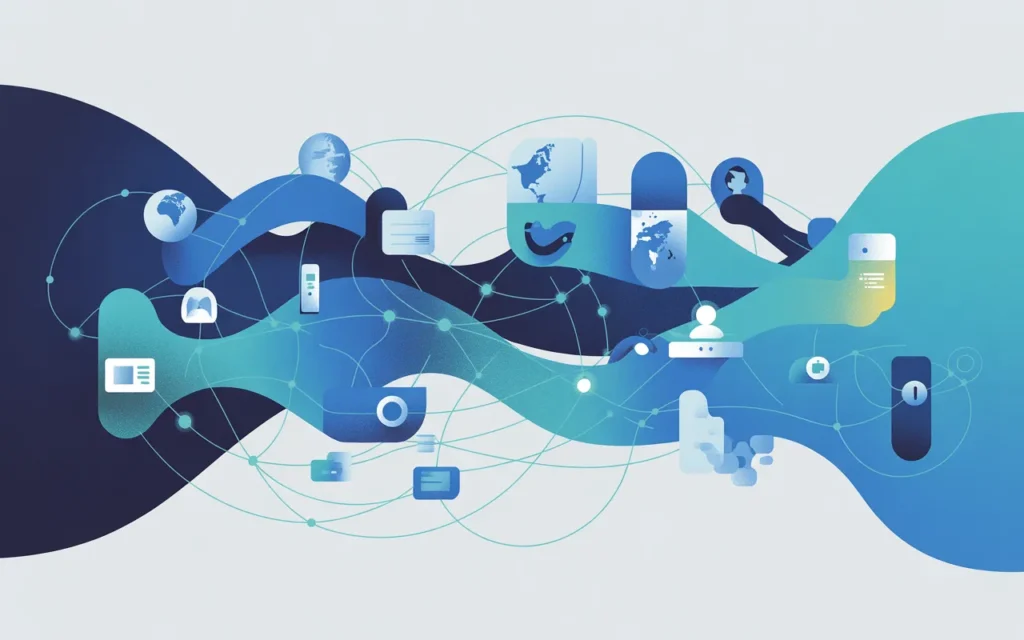
The hallmark of an Asiaks system is that you don’t see it working. There are no “loading” bars or manual check-ins. It runs in the background of your OS, acting as a connective tissue between your specialized tools (like your SEO trackers, your secure document tools like Trucofax, and your creative suites).
Asiaks vs. Traditional Automation
| Feature | Traditional Automation (Zapier/IFTTT) | Asiaks Framework |
| Logic | Linear (If This, Then That) | Multi-threaded & Predictive |
| Speed | Waiting for triggers | Real-time & Continuous |
| Input | Manual data entry | Autonomous data harvesting |
| Output | Single-task completion | Entire project lifecycle management |
Why Is Everyone Talking About This Now?
The trend is exploding in 2026 because businesses have realized that “more AI” isn’t the answer—better-connected AI is. We’ve reached a point where we have too many smart tools that don’t talk to each other.
Asiaks is the solution for the “siloed AI” problem. It’s the difference between having five smart employees who never speak and a high-performing team that anticipates each other’s moves.
The Human Impact: From “Manager” to “Director”
For the digital strategist or content creator, Asiaks changes your job description. You are no longer managing tasks; you are directing outcomes. You set the vision at the top of the Asiaks chain, and the system handles the mechanical execution. It frees up the human “brain power” for the things AI still can’t do: true creativity, empathy, and high-level strategy.
Final Verdict
Asiaks isn’t just a buzzword; it’s the infrastructure of the 2026 digital economy. If your workflow isn’t asynchronous and integrated yet, you’re essentially working with one hand tied behind your back. The move toward Asiaks is a move toward a world where technology finally gets out of the way and lets you do your best work.